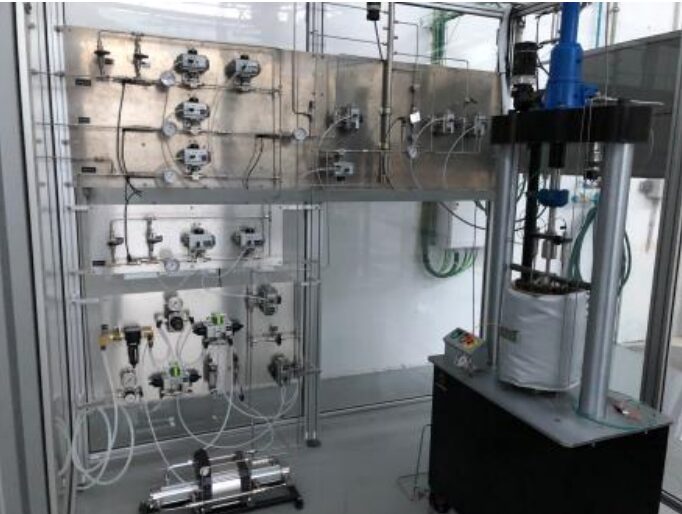
The energy transition is leading to far-reaching changes in gas infrastructures, which will gradually integrate hydrogen alongside natural gas. This transformation raises major technical challenges, particularly in terms of the safety, durability and integrity of existing networks.
This is the background to PilgrHYm, a European pre-normative research project, coordinated by NaTran R&I, launched in January 2024 over a 4-year period.
Co-financed by the European Union as part of the Horizon Europe program and the Clean Hydrogen Partnership, the PilgrHYm project aims to develop harmonized hydrogen test protocolsand guidelines for the conversion of natural gas transmission pipelines to hydrogen.
The main aim is to improve understanding of material degradation mechanisms, particularly hydrogen-induced embrittlement, in order to make technical and operational decisions more reliable for network operators across Europe.
The work carried out as part of PilgrHYm is based on a comprehensive scientific approach, combining :
This work enables us to build predictive tools that are essential for anticipating the behavior of infrastructures under real operating conditions.
PilgrHYm is based on close collaboration between network operators, research centers, industry and academic partners. This collaborative dynamic is reflected in the organization of consortium meetings and workshops with the various stakeholders, as well as participation in leading international scientific and technical events.
The project also aims to provide input for future technical guidelines and operational recommendations, in conjunction with European standardization work, to support the deployment of hydrogen in existing infrastructures in a safe and controlled way.
As coordinator of PilgrHYm, NaTran R&I is fully in line with its mission to generate scientific knowledge, develop robust methodologies and support innovation in support of the energy transition.
The lessons learned from the project will contribute directly to strengthening the center's expertise in hydrogen-related issues, and to supporting the evolution of gas networks towards more sustainable uses.
To find out more, click here to read the project's 2nd Newsletter.