After five successful years of experimentation, NaTran has launched a Call for Expressions of Interest (AMI) to write a new page in the history of Jupiter 1000, France's first industrial-scale Power-to-Gas demonstrator.
Located at the Grand Port Maritime de Marseille, within the Innovex platform developed with the PIICTO association, Jupiter 1000 has benefited from an industrial environment conducive to testing and studying the impact of its processes. And since the first hydrogen production in July 2020, it has become an international benchmark for experimentation in transforming renewable electricity - in this case from nearby wind turbines - into green hydrogen and synthetic methane, for eventual injection into the gas grid and/or storage. Although the initial project came to an end in the summer of 2024, the demonstrator has not ceased to operate: new tests have been carried out on behalf of partners, and research topics such as OPTHYCS, a major European project on hydrogen leak detection, have been launched.
Sylvain Lemelletier, Director of the Jupiter 1000 Project, is delighted with the results obtained at the end of the initial project: "To date, this is the fourth version of the alkaline electrolyzer tested on the site, and the methanation yield has improved significantly; in fact, two modules are now sufficient to obtain the same flow rate as that initially planned with ten."
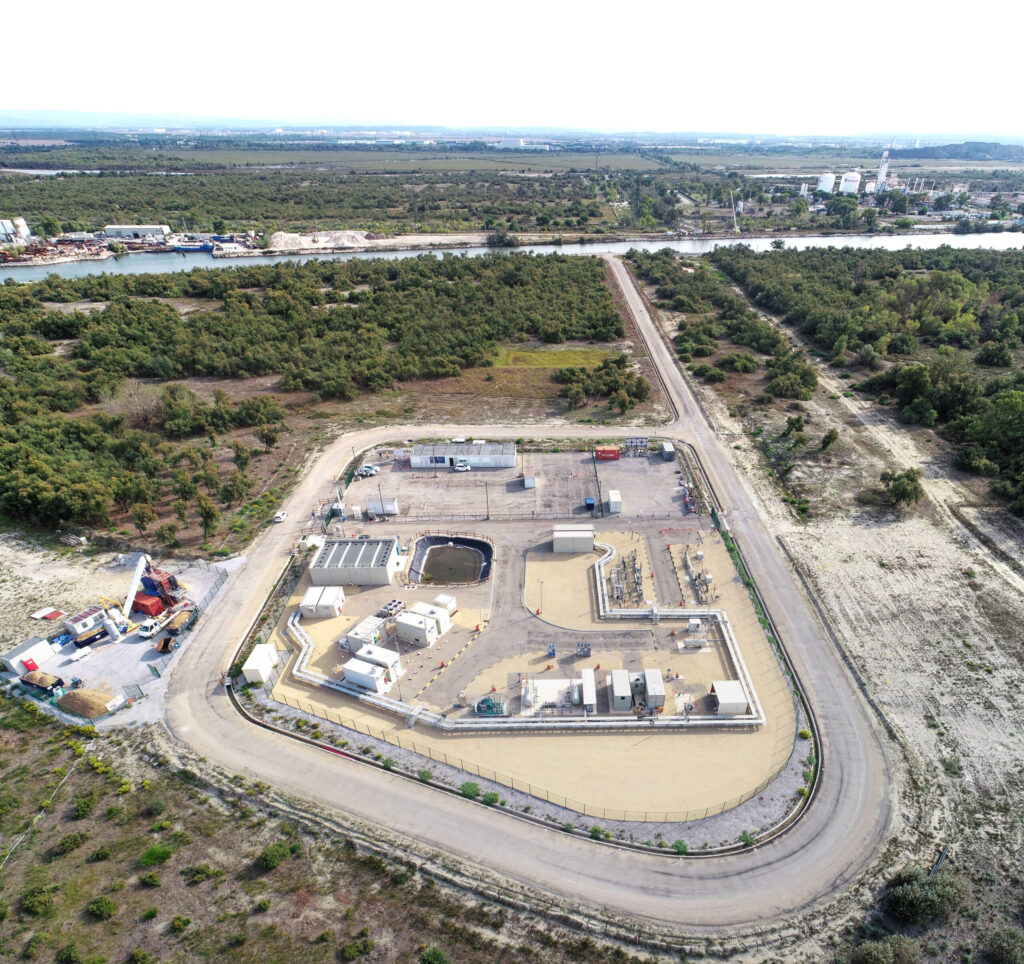
With the site due to remain in operation until at least the end of 2026, the question of the future arose. The AMI launched last April is part of this process. No fewer than thirty-six entities - companies, academics, schools, etc. - responded with forty associated projects. - responded with forty associated projects. This success confirms the legitimacy of the research unit in the region and its role as a driving force in the development of renewable gases. Similarly, the nature and diversity of the future uses envisaged - equipment testing, training, demonstrators - and the identity of the applicants, testify to the attractiveness of the sector and Jupiter 1000's ability to federate a national ecosystem around energy innovation.
"Pyrogasification, hydrothermal gasification, production of methanol and other synthetic fuels, collaborative projects, coupling with the power grid, etc. Not all projects are at the same level of maturity, nor do they require the same needs. In the coming months, it's up to us to study them, identify possible synergies and prioritize them, " comments Sylvain Lemelletier. The momentum is there, and the future of Jupiter 1000 in the service of the energy transition is wide open.
"Jupiter 1000 is totally in line with our mission, which is to lead and deploy an industrial and territorial ecology approach in close partnership with over fifty manufacturers - including NaTran, of course - the Grand Port Maritime de Marseille and local authorities. Thanks to NaTran's know-how and the many tests carried out, the Jupiter 1000 demonstrator has become a showcase for decarbonation, the circular economy and innovation. Over and above the technical aspects (renewable gases, grid injection, burner behavior at neighboring industrial plants), we have benefited from a strong collaborative and open dimension. Today, in conjunction with NaTran within the framework of this AMI, we are looking for synergies with the existing industrial ecosystem or other innovative and industrial project leaders."Nicolas Mat, General Secretary - Project Manager, PIICTO Association.
For more information on the proposals received in response to the Call for Expressions of Interest, please consult the summary here: Synthesis of the AMI Jupiter 1000. (in French)